
Meta
Meta
Meta's platforms are still the cornerstone of most digital marketing strategies. With Facebook as Norway's most used social media platform (82% of Norwegians have a profile, 65% are daily users) and Instagram still growing, these channels offer unique opportunities for both broad reach and precise targeting.
Facebook has gone through a significant transformation in recent years. From being primarily a social networking service, the platform now works as a multi-dimensional ecosystem for social contact through Messenger, news consumption, e-commerce and entertainment. This gives your business unique opportunities, but also new challenges.
An organic approach that actually works
Organic reach on Facebook has been under pressure for years, but there are still strategies for building a presence without spending a lot of money...
Authenticity beats perfection in today's algorithm landscape. Content that looks too polished or obviously commercial is deprioritised, while more genuine, personal content is rewarded. This marks a shift from earlier years' focus on technical perfection to today's emphasis on genuineness.
Posts that create meaningful interactions, especially comments and shares, get significantly wider distribution than content that only generates passive likes. Questions, polls and discussion starters therefore work particularly well for stimulating algorithmic distribution.
“Let's have fun” mode is key to understanding how Facebook is used. Studies show that 70% of users open the app primarily to unwind and for social contact, not for commercial messages. Content that fits this state of mind consistently performs better.
Posting time still matters. Analysing your audience's usage patterns is essential, but data generally shows that Tuesday to Thursday between 1 pm and 4 pm gives the best engagement for B2C content, while B2B content typically performs better early in the working day (8-10 am) or right after working hours (4-6 pm).
Read more

Design
EMPET – de firbentes førstevalg
Paid Facebook advertising
Facebook Ads remains one of the marketer's most powerful tools, with unique targeting options even at a time of increasing privacy restrictions.
Advanced segmentation that goes far beyond demographics is the key to effective advertising. By combining interest-based, behavioural and contextual targeting, you create relevance that drives both engagement and conversion.
“Own your own data”
First-party data is becoming increasingly important. Implementing the Conversions API alongside the Meta Pixel ensures more robust tracking and better attribution in the face of third-party cookie restrictions. Brands that have established good first-party data report 30-40% better targeting precision.
Balanced automation is the new best practice. Campaigns that combine manual segmentation with algorithmic optimisation of bid delivery consistently show better results than campaigns that lean too heavily on either full manual control or unlimited automation.
Retargeting remains effective, but requires fresh thinking. With shorter tracking windows and limited cross-domain tracking, marketers need to think more strategically about retargeting, focusing on high-value segments and more precise triggers.
Read more

Nyheter
Marius Vestlien Hansen headhuntet som SEO-leder i Maverix
Reels now dominate algorithmic prioritisation. Short vertical videos get significantly more organic distribution than traditional posts and Stories. Analyses show that accounts that publish Reels at least 2-3 times a week achieve on average 40-60% higher total reach than those sticking to static content.
Aesthetic consistency builds recognition and follower loyalty. This doesn't mean all content has to be identical, but there should be a visual common thread that ties the content together and creates a clear brand identity. Feed planning tools that allow visual curation before publishing have proved valuable for maintaining this consistency.
We also see engagement through authenticity on Instagram. Paradoxically, while visual quality still matters, we see a marked shift towards more authentic and less “overproduced” content. This applies especially to Stories and Reels, where more spontaneous content generates higher engagement.
60% watch Stories with sound on. This is a significant difference from Facebook, where the majority consume content without sound. For Instagram, this means audiovisual design becomes a critical element of content production, especially for video formats.
Paid Instagram advertising
Instagram ads have a unique strength in their seamless integration into the user experience.
Shopping features and direct conversion. Meta's investment in shoppable content on Instagram has created opportunities for frictionless buying journeys, from discovery to conversion, all within the app. Ads with product tags and direct purchase options show 23% higher conversion rates than ads that send users to external websites.
Creative adaptation to each format. Instagram now has several distinct ad placements (Feed, Stories, Reels and Explore), each with unique user expectations and engagement patterns. Ads designed specifically for each placement consistently perform 35% better than generic content duplicated across placements.
Influencer collaborations and paid partnerships remain particularly effective on Instagram. The platform is still the primary channel for influencer marketing, and paid partnerships that combine influencers' authenticity with targeted promotion offer unique opportunities for niche targeting with high credibility.
Creative refresh frequency is critical on Instagram. Creative fatigue sets in faster than on many other platforms, with studies showing a significant drop in performance after just 1-2 weeks of exposure to the same creative. A planned cycle of creative renewal is therefore essential.
Read more
Reklame
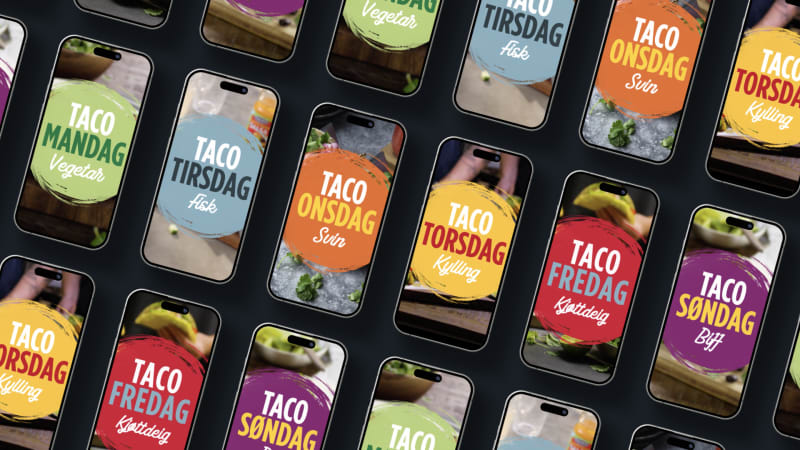
Slik ble SANTA MARIA størst i Norge på taco
How we work with Facebook and Instagram advertising
Strategy and audiences: We decide what the ads should achieve, and who they should reach, before the budget is allocated.
Creative content: We create video, photos and formats adapted to each placement. Read more about film and photo.
Campaign setup: We build campaigns that let Meta optimise towards the right goals, without losing control of messages and audiences.
Measurement: The Meta Pixel and Conversions API provide more robust data. Read more about measurement and analytics.
Optimisation: We replace ad creative before it wears out, and move budget to where it delivers the most.
Facebook, Instagram or both?
Facebook reaches broadly and suits most audiences, while Instagram is strongest on visual content and younger audiences. Most campaigns run in both channels with adapted content. See also TikTok, LinkedIn and how to build a social media channel strategy.
Questions and answers about Facebook and Instagram advertising
How much does Facebook advertising cost?
How do I advertise on Instagram?
What is the Conversions API?
How often should we change our ad creative?
Want to know more about social media?
