
How to build an
effective channel strategy
for social media
How to build an
effective channel strategy
for social media
In today's fragmented media landscape, a well-considered advertising strategy is more important than ever.
With constantly new platforms, changing user patterns and technological shifts such as the end of third-party cookies, marketers need to think smarter about how they reach their audiences.
By Marius Vestlien Hansen
SEO/SEM Lead, Maverix
marius@maverix.no
Why a holistic channel strategy is crucial for success
A familiar problem for many marketers is the tendency to spread resources too thin. You can't be everywhere with the same quality and intensity. A strategic approach to channel selection is therefore essential to maximise the effect of your marketing budget.
A good channel strategy is about deliberate choices: not just where you should be, but also where you choose not to be. In this article we explore how you can build a coherent strategy that integrates different social platforms into one holistic customer journey.
How to choose the right social media channels for your business
Channel choices should never be based on trends or personal preferences. Instead, it should be a systematic process anchored in three key factors:
How your audience actually uses the platforms
To succeed on social media, you need to be where your audience actually spends its time. Let's look at some key figures for the most important platforms in Norway.
Facebook still dominates, with 82% of Norwegians having a profile and 65% using the platform daily. The platform has good coverage across all age groups, and works as a multi-dimensional medium for social contact, news, entertainment and e-commerce.
LinkedIn has 1.2 million Norwegian users, but only 4% use the channel daily, while 15% visit monthly. This affects how you should plan campaigns: they need a longer run time on LinkedIn (at least 3 weeks) to achieve sufficient reach.
Snapchat is actually Norway's second-largest social media platform with 2.7 million users, of whom 2.4 million are daily users spending an average of 30 minutes spread across 20 sessions every day. The platform works primarily as a “best friends network” focused on one-to-one communication.
TikTok has 899,000 Norwegian users, with 14% of the population using the app daily for an impressive 87 minutes a day spread across 20 sessions. The platform is built for exploration and entertainment, with a focus on authentic, unfiltered content.
Read more

Design
EMPET – de firbentes førstevalg
The platforms' unique characteristics and user modes
Each social platform has its own unique character and “user mode”: how users are mentally tuned in when they are active on the platform. This has direct consequences for what kind of content works where.
Facebook offers advanced targeting tools based on geography, interests, demographics and pixel data. The platform suits the entire marketing funnel thanks to varied formats and usage patterns.
LinkedIn is primarily suited to B2B communication, with targeting based on profession, industry and seniority. Here users are in “professional mode” and look for content that adds value to their career and professional development.
Snapchat is the “let's have fun” app, where users are in a playful, relaxed mode. The platform has documented increased use around holidays and special occasions, which creates particular opportunities for seasonal campaigns.
TikTok is a “video universe” where 70% use the channel purely for entertainment. Here the brand can be more playful, real and authentic, and take advantage of the channel's algorithm-based batch distribution for organic reach.
The channel's role in the marketing funnel
Not all channels are equally effective at every stage of the customer journey. A strategic channel mix should cover the whole funnel from awareness to conversion.
The awareness stage Here Facebook, Snapchat and TikTok work well with their broad user bases and opportunities to reach new audiences.
The consideration stage LinkedIn can be particularly effective for B2B, while Facebook works well for both B2B and B2C with more in-depth content.
The conversion stage Here retargeting on Facebook can be effective, while LinkedIn can drive B2B leads with campaigns targeted at decision-makers.
Five principles for an effective digital content strategy
To create content that actually engages and converts across channels, follow these five key principles:
1. Short & powerful: sender identity from the first second
In today's information-saturated reality, you only have seconds to capture attention. Make sure the brand is clearly identifiable from the first moment through a logo or name. This creates recognition and builds brand awareness even among those who just scroll past.
2. Frame for mobile: make the most of the mobile screen
More than 90% of social media use happens on mobile. So always design your content with the mobile experience first. Think vertical format (9:16), large and readable text elements, and visuals that make an immediate impact even on a small screen.
3. Sound of silence: optimise for sound both on and off
Different platforms have different sound habits. 60% watch with sound on in Stories, while 80% watch without sound in the feed. So make sure your content works both ways: use subtitles and visuals that communicate the message even without sound, but use the power of sound to strengthen the message when it is on.
4. Less is more: ONE main message per execution
Communication researchers have long confirmed that audiences rarely remember more than one message from a single ad. So focus on ONE clear main message in each creative execution, with one corresponding goal. Several messages create confusion and reduce effectiveness.
5. Tell them what you want them to do: a clear call to action
Don't let your audience guess what you want them to do. Always include a clear, concise, action-oriented call to action that shows the next step. This reduces cognitive load and increases the likelihood that the user actually takes the desired action.
Platform-specific strategies for the best results
Facebook: the versatile main channel
Facebook is still the most complete advertising tool, with its broad reach and varied usage patterns.
Vary content formats between images, video, carousel and Stories to meet different user preferences.
Use advanced targeting based on demographics, interests and pixel data.
Optimise for mobile, as 98% of users access the platform on mobile devices.
Aim for content that creates meaningful interactions: the algorithm favours content that generates conversations.
Schedule posts for peak activity times, especially Tuesdays between 1 and 4 pm.
LinkedIn: the professional B2B arena
LinkedIn should be a primary channel for B2B marketing, with particular emphasis on expert content and thought leadership.
Make use of the platform's unique targeting options based on profession, seniority and industry.
Install the LinkedIn Insight Tag to enable retargeting.
Publish at peak times (Tuesday to Thursday, 8-10 am and 4-6 pm).
Prioritise personal stories and thought leadership, which generate up to three times more engagement.
Always include images (doubles the comment rate) or video (five times more engagement).
Plan for longer campaign periods: at least three weeks for sufficient reach.
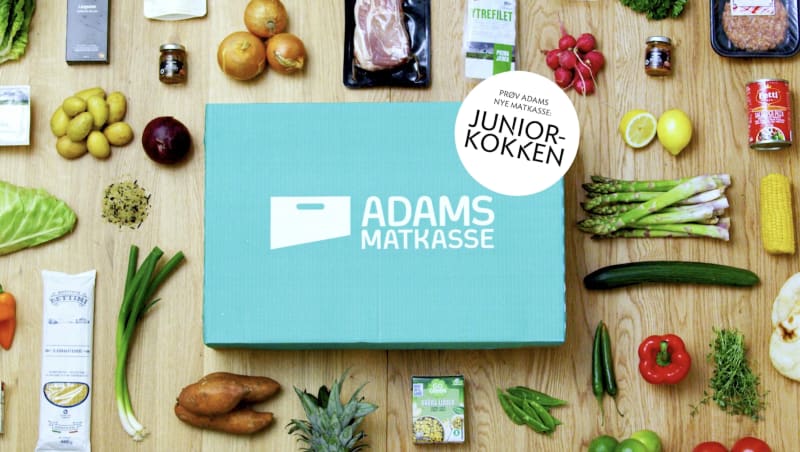
Reklame
ADAMS MATKASSE lanserer juniorkokken
Snapchat: the playful supplementary platform
Snapchat works excellently as a supplementary channel for reaching younger audiences in particular and creating authentic moments.
Optimise for an audiovisual experience: 60% watch with sound on.
Be playful and present in the users' situation.
Use geography, demographics and retargeting for precise targeting.
Adapt the content to holidays and special occasions when usage increases significantly.
Use the platform's unique “here and now” character to create a sense of exclusivity and immediacy.
TikTok: the authentic video channel
TikTok is a unique opportunity for brands that want to show their more authentic side.
Keep videos short (9-15 seconds recommended).
Follow and use trends, popular sounds and filters for greater visibility.
Let the brand be more playful, real and down-to-earth.
Adapt the content to relevant niches and categories (such as #BookTok, #BeautyTok and so on).
Make use of the platform's algorithm-based distribution for organic reach.
Read more

Nyheter
Marius Vestlien Hansen headhuntet som SEO-leder i Maverix
From strategy to implementation
Strategic planning
Start by defining the campaign's primary objectives: are you after reach, engagement or conversions?
Analyse the audience's media behaviour using available data and insight.
Assess the channels' characteristics against the campaign's needs and goals.
Allocate the budget strategically based on each channel's role in the marketing funnel.
Content development
Facebook Varied content that balances information and entertainment
LinkedIn Professional, informative content focused on expert value
Snapchat Playful, authentic content that fits the moment
TikTok Entertaining, authentic and trend-aware content
Always format content optimally for each channel, with particular emphasis on mobile formats and platform-specific norms.
Measurement and optimisation
Define relevant KPIs for each channel; these will vary based on the channel's role in the strategy.
Implement the necessary measurement tools, such as pixels/tags, UTM parameters and A/B testing.
Carry out regular analysis and adjustments based on actual performance.
Continuously reallocate resources towards the channels that deliver the best results.
Questions and answers about social media channel strategy
What is a social media channel strategy?
How do you choose the right social media channels?
Should a business be present on every social media platform?
How do you allocate the ad budget between channels?
How do you adapt content to each social media channel?
Want to know more about social media?
