
Search engine
anatomy
Search engine
anatomy
- SEO
- Inside the anatomy of a search engine
Search engines are the internet’s navigation system, but how do they actually work? Let’s explore the complex process, from the user’s first keystroke to the moment the final search results are presented.
By Marius Vestlien Hansen
SEO/SEM Lead, Maverix
marius@maverix.no
The input process: from keyword to intent analysis
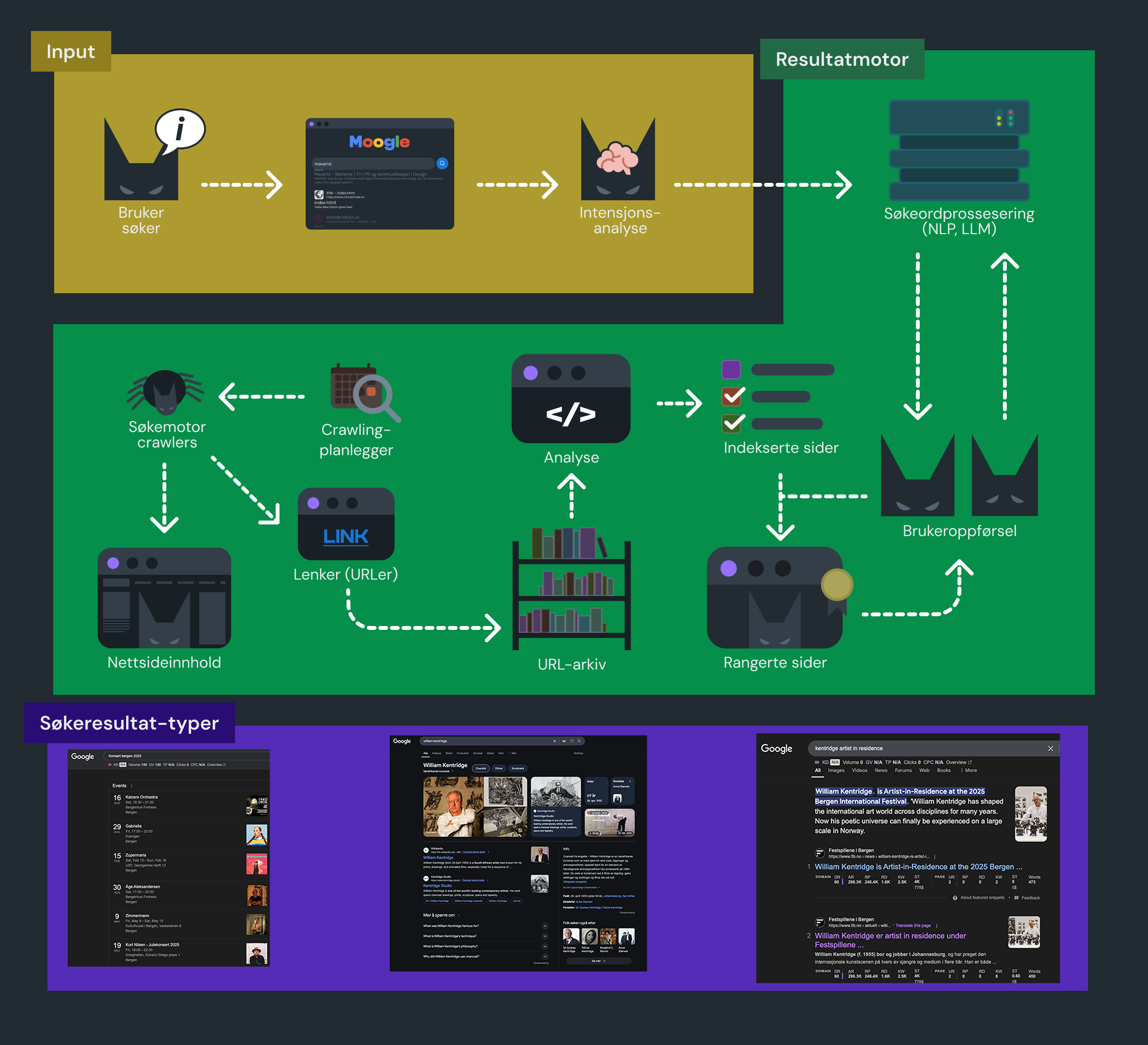
When a user types a query into a search engine, a sophisticated process begins. The first step is the user’s input: the search itself. This signal is sent immediately to the search engine’s intent analysis, which uses advanced technology to understand what the user is really looking for. The analysis is critical to making sure the results meet the user’s actual information needs and go beyond literal keyword matches.
The results engine: the brainpower behind search
After the intent analysis, the results engine takes over. This is where the advanced keyword processing happens, through natural language processing (NLP) and machine learning (LLMs). The technology lets the search engine understand context, synonyms and related concepts, as well as exact word matches.
Read more

14 SEO myths to stop believing in 2026
Parallel processes: the hidden machinery
Alongside the keyword processing, several critical systems work in the background:
Search engine crawlers and content indexing
Search engine crawlers, often pictured as little “spiders,” continuously explore the web. They scan website content and follow links (URLs) to discover and catalog new content. A crawl scheduler steers the work and strategically decides which pages to explore and how often.
URL archive and analysis system
While the crawlers work, a comprehensive URL archive is built up. The archive is a dynamic database that is analyzed continuously, far more than a passive collection of links. The analysis system assesses relationships between web pages, authority and relevance for different keywords.
Indexed and ranked pages
The result of these processes is a system of indexed pages that can be ranked by relevance. Rankings are strongly influenced by user behavior, meaning how previous visitors have interacted with the content. This creates a continuous feedback loop that helps the search engine improve its results over time.
Types of search results: the final presentation
Modern search engines present results in different formats adapted to the nature of the query, from traditional text-based results to rich media displays with images, videos and interactive elements. This variety is carefully matched to the user’s intent and the type of content being searched for.
The continuous interplay
The most fascinating thing about modern search engines is how all these components work together in real time. User behavior from millions of searches is analyzed continuously and affects both the rankings and how the crawl scheduler prioritizes its resources. The result is a self-improving system that grows ever more precise and relevant.

Possible implications
If you want visibility in the search results, understanding this complex machine is essential. Good rankings come from creating content that genuinely engages users and meets their information needs, in addition to technical optimization. This involves:
Thorough, well-structured content that answers the user’s questions
Technical optimization that makes it easy for crawlers to understand and index the content
A good user experience that encourages engagement and longer visits
Natural integration of relevant keywords and topics
Regular content updates to keep it relevant and current
The search engine’s ability to deliver relevant results is becoming more sophisticated, driven by advances in artificial intelligence and machine learning. This underlines the importance of focusing on real value for the user, rather than trying to “trick” the system with superficial optimization.
Understanding this complex mechanism is the first step toward making full use of its potential, whether you are a content producer, a marketer or a website owner.
Read more

Caser
Gold for Visit Norway and Maverix: An ever larger piece of Norway
Read more in the glossary about Crawling, Indexing and SERP.






Questions and answers about search engines
What does a search engine do in practice?
What is a crawler?
Why is technical structure important for SEO?
What is intent analysis?
What should I do to rank better?
Want to know more about SEO?

